
Hantavirus in Europe: What You Actually Need to Know
Let’s be honest — when most people hear “hantavirus,” their mind jumps straight to dramatic American outbreak stories. The 1993 Four Corners crisis. The Yosemite cluster in 2012. The terrifying case reports from Patagonia. Europe barely gets a mention in that conversation, and most Europeans go through life assuming this is simply not their problem.
That assumption is understandable, but it’s wrong. And in certain situations, it could be genuinely harmful.
Europe has its own hantavirus problem — quieter, less sensational, but very real. Thousands of people across the continent are infected every year. Some end up in intensive care. A smaller number don’t make it home. And the disease has been doing this for decades, largely under the radar of public health awareness outside a handful of Nordic countries where doctors and forest workers have learned to take it seriously.
This guide is an attempt to fill that gap. Not to frighten anyone, but to give people the kind of clear, honest information that lets them make sensible decisions — whether you’re a farmer in Bavaria, a hiker in Serbia, or someone who just inherited a rural cabin in Finland that’s been sitting empty since last autumn.

- First, Let's Clear Up the Confusion
- The Viruses Circulating in Europe Right Now
- Where in Europe Are Cases Actually Happening?
- How Does the Virus Actually Reach People?
- Recognizing the Symptoms: What HFRS Actually Feels Like
- Who Faces the Highest Risk?
- Getting Diagnosed: The Testing Reality
- Treatment: Honest About the Limitations
- The Vaccine Question
- Climate Change and What Comes Next
- What You Can Actually Do to Protect Yourself
- Final Thoughts
First, Let’s Clear Up the Confusion
Here’s the thing that most online articles get wrong about hantavirus in Europe: they treat it like a single disease. It isn’t. Hantavirus is an entire genus of related viruses, each one living in a specific rodent species, each one causing a somewhat different illness with a very different risk profile.
In the Americas, hantavirus kills through the lungs. The disease is called Hantavirus Pulmonary Syndrome (HPS), and when it goes wrong, it goes wrong fast — fluid fills the lungs, oxygen levels crash, and the mortality rate for some strains approaches 40%. It’s brutal and fast-moving in a way that justifiably gets attention.
European hantavirus strains don’t do that. Instead, they attack the kidneys. The clinical syndrome is called Hemorrhagic Fever with Renal Syndrome (HFRS), and while it can absolutely be life-threatening, the overall mortality rate is considerably lower than its American counterpart — less than half a percent for the most common European strain, up to around 12% for the more aggressive variants found in parts of the Balkans.
That’s genuinely better news. But “lower mortality than the American version” is not the same as “harmless.” People with HFRS end up in hospital, sometimes in the ICU, sometimes requiring dialysis. Some develop long-term kidney problems. And during bad outbreak years in Scandinavia, the case numbers run into the thousands.
The Viruses Circulating in Europe Right Now
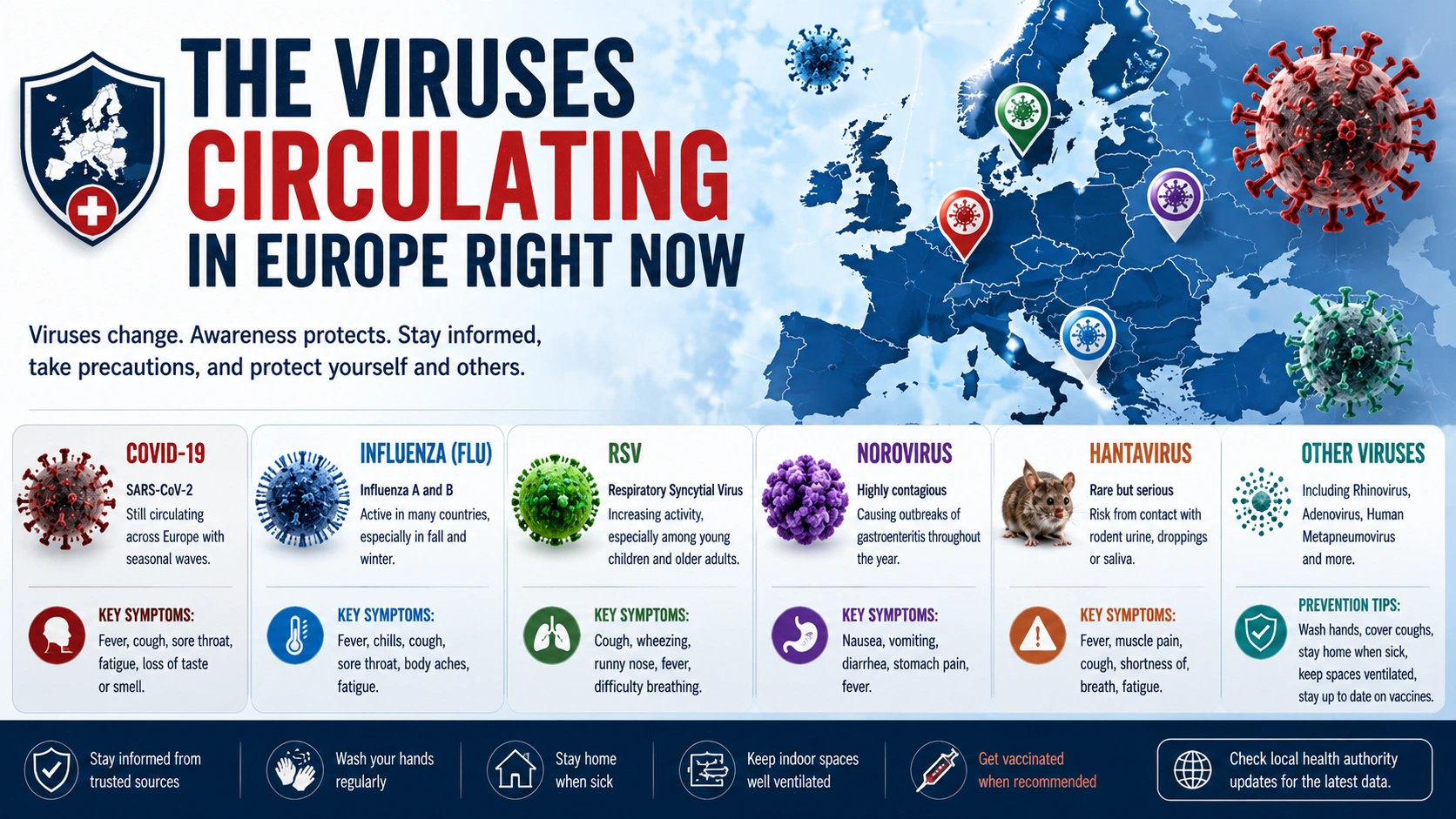
Europe doesn’t have just one hantavirus to worry about — it has several, each tied to a different rodent and occupying a different geographic territory.
| Virus Strain | Rodent Host | Where It’s Found | Disease It Causes | Typical Mortality |
|---|---|---|---|---|
| Puumala (PUUV) | Bank vole | Scandinavia, Finland, Central & Western Europe | HFRS (nephropathia epidemica) | Less than 0.5% |
| Dobrava-Belgrade (DOBV) | Yellow-necked mouse | Balkans, Eastern Europe | HFRS — moderate to severe | 5–12% |
| Seoul (SEOV) | Brown rat | Worldwide, including Europe | HFRS — mild to moderate | Less than 1% |
| Tula (TULV) | Common vole | Central and Eastern Europe | Rarely causes human illness | Very low |
| Saaremaa (SAAV) | Striped field mouse | Northern and Eastern Europe | HFRS — mild | Very low |
Puumala is the one responsible for the vast majority of European cases. If someone in Finland or Sweden gets sick with HFRS, it’s almost certainly Puumala. The disease it causes has a specific name — nephropathia epidemica — that you’ll see frequently in the Nordic medical literature. Most patients recover fully, though the illness can be genuinely miserable and occasionally severe.
Dobrava is the one that warrants more caution. It’s less common than Puumala, but it hits harder. The Balkans have seen fatal cases, and the disease can cause permanent kidney damage in a way that Puumala typically doesn’t. If you’re spending time in rural Serbia, Croatia, or Bosnia, Dobrava is the strain to be aware of.
Seoul virus is interesting because its carrier — the ordinary brown rat — lives everywhere humans do. This makes it a global concern rather than a regional one, including in European cities. Most Seoul infections are relatively mild, but they do happen, and they occasionally go undiagnosed because clinicians don’t think of hantavirus in urban settings.
Where in Europe Are Cases Actually Happening?
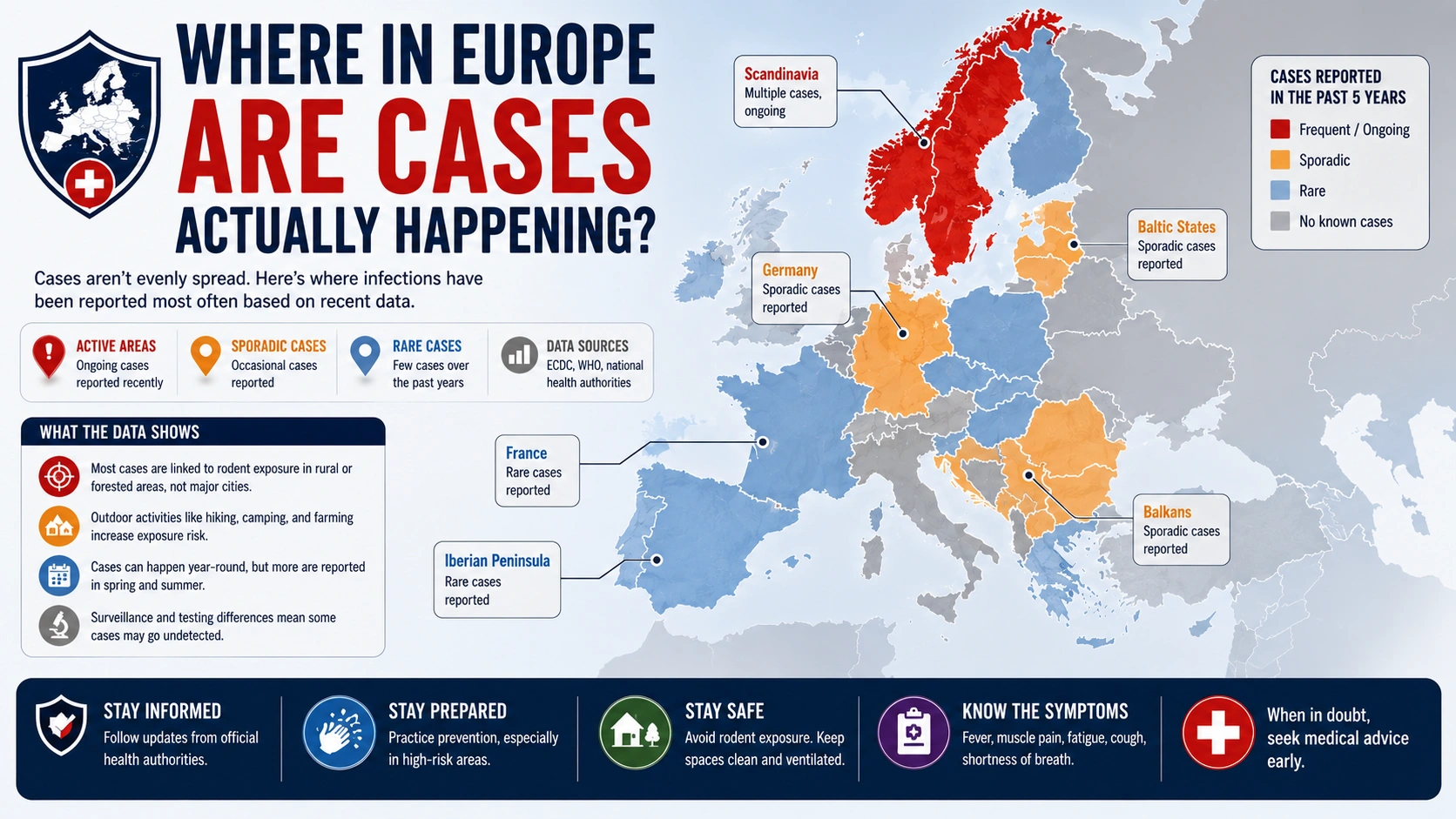
The geography of hantavirus in Europe follows the distribution of its rodent hosts, which in turn follows forests, farmland, and the particular climate conditions that allow vole and mouse populations to thrive.
Finland is genuinely in a category of its own. The country has one of the highest per-capita rates of hantavirus infection anywhere in the world. During peak years — which arrive roughly every three to four years, driven by the cyclical boom-and-bust of bank vole populations — Finland records several thousand cases in a single year. Finnish doctors are well-trained to recognize HFRS, which is probably the only silver lining of dealing with it so frequently.
Sweden and Norway have similar patterns, though with lower case counts. The disease is well-recognized in Scandinavian medical culture, and rural residents in high-risk areas often have at least a basic awareness of it.
Germany, Belgium, and the Netherlands have seen growing case numbers over recent decades, with Germany in particular recording significant outbreak years. The pattern there correlates strongly with what ecologists call “mast years” — seasons when oak and beech trees produce exceptionally large quantities of seeds and nuts, triggering explosive growth in rodent populations. Forestry workers and people living near beech forests in Bavaria, Baden-Württemberg, and North Rhine-Westphalia face the highest risk.
Russia — particularly the European portion — actually has more HFRS cases than any other country on the continent, with tens of thousands recorded annually. The Ural region is especially affected.
The Balkans see fewer cases than Scandinavia in absolute numbers, but the Dobrava strain means the cases that do occur tend to be more severe.
France, Spain, and the UK all have sporadic cases. Spain’s cases are concentrated in the northern regions where bank voles live in sufficient density. The UK has documented Seoul virus infections, mostly linked to people who work with rats. Neither country faces anything approaching the outbreak scale seen further north and east.
How Does the Virus Actually Reach People?
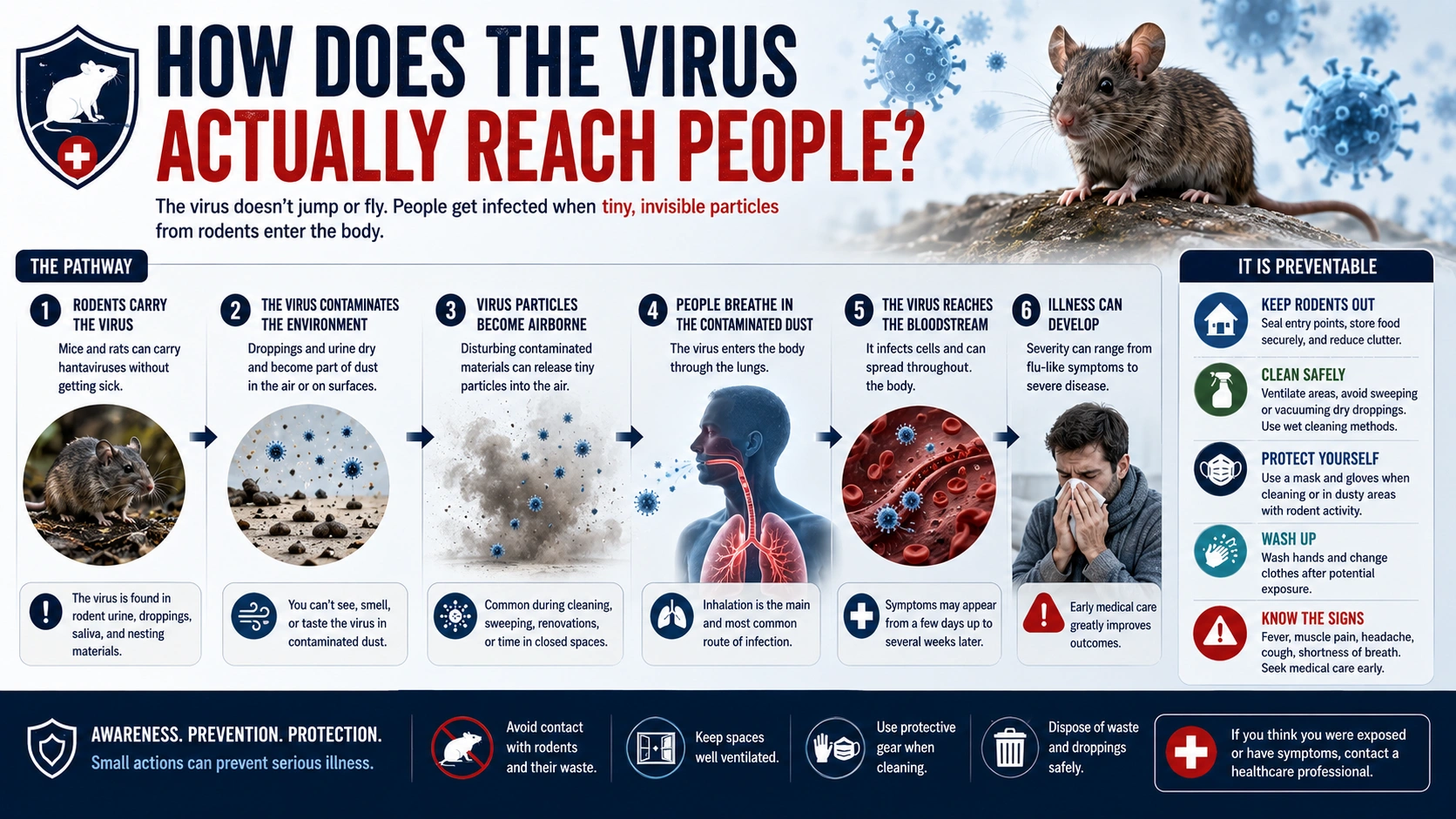
This is where it gets important to be concrete, because understanding the transmission route is directly what allows people to protect themselves.
The primary way hantavirus infects humans is through breathing in tiny aerosolized particles — dried fragments of rodent urine, droppings, or saliva that become suspended in the air when disturbed. You can’t see them. You don’t smell them. You just breathe them in, and weeks later you’re sick.
That scenario plays out across several specific settings in Europe:
Forestry and outdoor work sit at the top of the risk list. In Finland and Sweden, a substantial share of cases every year involves forestry workers, hunters, and people who forage for mushrooms or berries in the woods. Working close to the forest floor — turning over logs, handling leaf litter, crawling through undergrowth — puts people in direct proximity to environments where bank voles live and leave their waste.
Agricultural settings are the other major exposure environment. Farmers across Central and Eastern Europe face elevated risk, especially during harvest when rodents that have been living in crops scatter into farm buildings, hay storage, and outbuildings. Old grain stores can accumulate years of rodent contamination.
Reopening a property that’s been shut up for months is a scenario that catches people off guard. That summer cabin, the family farmhouse, the garage that hasn’t been properly opened since autumn — these spaces are prime real estate for rodents over winter. When someone returns in spring and starts sweeping out the mouse droppings, they’re doing exactly the thing that creates the greatest risk of exposure.
The other transmission routes — direct contact with rodents, or being bitten — do exist but account for far fewer cases than inhalation. Person-to-person transmission, as seen with the Andes strain in South America, has not been documented for European hantavirus strains.
Recognizing the Symptoms: What HFRS Actually Feels Like
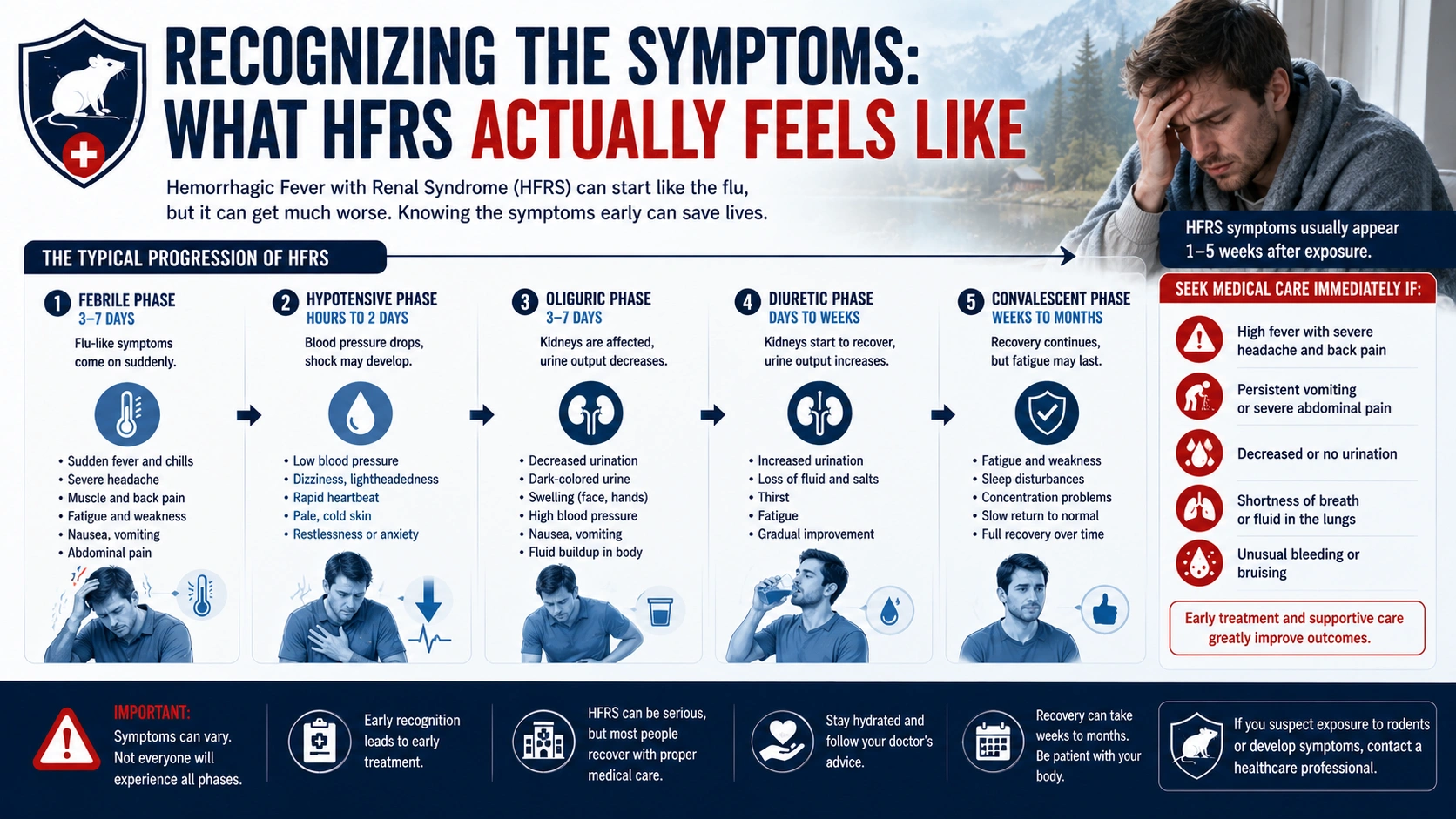
The clinical course of European hantavirus HFRS has a reasonably predictable structure, though individual experiences vary considerably based on which strain is involved.
The First Few Days: It Feels Like Flu, But Worse
Hantavirus doesn’t creep up gradually. It tends to announce itself abruptly with symptoms that many patients describe as among the most severe they’ve experienced:
- Sudden high fever, often above 39°C, sometimes reaching 40°C
- A headache that many patients describe as exceptionally intense — not the usual dull pressure of a tension headache
- Severe lower back and lumbar pain — this is often a distinguishing feature
- Aching muscles throughout the body
- Flushing and redness of the face, neck, and chest
- Redness of the eyes without discharge
- Nausea, vomiting, and general abdominal discomfort
The thing that most often leads to a misdiagnosis of flu at this stage is the absence of the typical upper respiratory symptoms — the runny nose, the sore throat, the cough that you’d expect with influenza. With hantavirus, those aren’t usually present, at least not early on.
Days Four Through Ten: The Kidney Phase
As the illness moves into its second week, the renal involvement becomes the defining feature. This is when the situation can become dangerous:
- Urine output drops noticeably — patients may realize they’re going to the bathroom much less than usual
- Blood pressure can fall to concerning levels
- The face and hands may begin to swell
- Blurred vision is a particularly distinctive feature of Puumala infection — caused by inflammation affecting the structures around the eyes
- Platelet counts drop, increasing the risk of bleeding complications
- Abdominal pain often intensifies
- In severe cases, signs of acute kidney failure become apparent
The acute kidney injury that HFRS produces spans a wide spectrum. Some patients have mild, temporary dysfunction that resolves without specific intervention. Others require dialysis. Dobrava cases are more likely to produce lasting kidney damage than Puumala cases.
Recovery: Weeks to Months
The good news is that most people who receive proper medical care do recover. Urine output normalizes, kidney function gradually returns, and the fever resolves. The less good news is that complete recovery is often slow. Many patients report weeks of persistent fatigue, difficulty concentrating, and reduced physical capacity long after the acute phase has resolved. A smaller number have measurable reduction in kidney function that persists for years.

Who Faces the Highest Risk?
Several factors meaningfully increase an individual’s likelihood of encountering hantavirus in Europe:
Occupation is the strongest predictor. Studies consistently identify elevated infection rates among:
- Forestry workers and those working with timber
- Farmers and people who work with livestock or grain storage
- Military personnel conducting field exercises in endemic areas
- Pest control workers handling rodent infestations
- Park and nature reserve staff
- Construction workers on rural sites
Recreational behavior matters too. Hunters, hikers, mushroom foragers, and regular campers in forested areas of Finland, Sweden, Germany, and the Balkans face higher exposure than people who stay in urban environments.
Timing is significant. Bank vole populations in Scandinavia and Central Europe follow a three-to-four-year cycle. During a peak year, the density of infected rodents in forests can be dramatically higher than during the low point of the cycle. Being aware of whether you’re heading into a peak year in your region is genuinely useful information.
Geographic location within Europe creates enormous variation in baseline risk. Rural Finland during a peak vole year and central London occupy completely different points on the risk spectrum.
Getting Diagnosed: The Testing Reality
Across Europe, access to reliable hantavirus testing varies considerably by country and healthcare setting.
In Finland, Sweden, and Germany, the disease is well-recognized, testing is available, and clinicians in emergency and general medicine tend to consider it when the clinical picture fits. In lower-incidence countries, it may simply not cross a doctor’s mind — which is why patients who have had potential rodent exposure need to volunteer that information explicitly rather than waiting for the doctor to ask.
When hantavirus is being considered, the diagnostic workup typically includes:
- IgM and IgG serology — blood tests looking for the antibodies the immune system produces in response to infection. IgM antibodies are typically detectable at the point when patients feel sick enough to seek medical attention, making this a practical first-line approach.
- RT-PCR — molecular testing that detects actual viral genetic material in the blood. Particularly useful in very early-stage cases before the antibody response has developed fully.
- Urinalysis — finding significant protein in the urine of a febrile patient with back pain and recent rural exposure should, at minimum, trigger consideration of HFRS.

Treatment: Honest About the Limitations
There is currently no specific antiviral medication licensed for hantavirus HFRS in Europe. That’s a straightforward fact, and it’s worth stating plainly rather than dancing around it.
Treatment is entirely supportive — meaning clinicians manage the complications rather than attacking the virus directly. In practice, this involves careful fluid management, monitoring kidney function, correcting electrolyte imbalances, providing dialysis when needed, and managing any bleeding complications that arise.
Ribavirin, an antiviral used for several other viral infections, has shown some benefit in Asian HFRS studies when given early. Its use with European strains is less well-established, and it’s not routine practice across European hospitals.
The absence of a specific treatment is exactly why early recognition matters. Patients who arrive at hospital before kidney injury becomes severe have a far smoother path to recovery than those who present late with established acute kidney failure.
The Vaccine Question
There is no licensed hantavirus vaccine available anywhere in Europe. China and South Korea have produced vaccines against their regional strains, but these are not accessible in European countries and have not undergone European regulatory review.
Research programs in Finland, Germany, and Sweden are working on vaccine candidates, with some promising early-stage results. But the path from promising early data to licensed product is long and expensive, and the relatively low absolute case numbers in non-outbreak years make it commercially difficult to attract the investment needed to push vaccine development across the finish line. It’s a frustrating reality of how pharmaceutical development economics work.
Climate Change and What Comes Next
One dimension of the European hantavirus story that researchers are watching with growing concern is the potential role of climate change in reshaping where and how frequently the disease occurs.
The rodents that carry European hantavirus are sensitive to temperature, food availability, and forest conditions — all of which are being altered by a warming climate. Warmer winters reduce rodent mortality, potentially sustaining larger baseline populations. Shifts in forest mast production may be triggering more frequent boom years. Several European studies have documented a gradual northward and upward-altitude expansion of hantavirus cases, consistent with range shifts under warming conditions.
Countries that have historically seen very few indigenous hantavirus cases — including parts of the British Isles — may face increasing exposure in the coming decades. This isn’t a reason for alarm, but it is a reason for public health agencies to update their risk maps and ensure clinicians in previously low-risk areas develop familiarity with the disease.
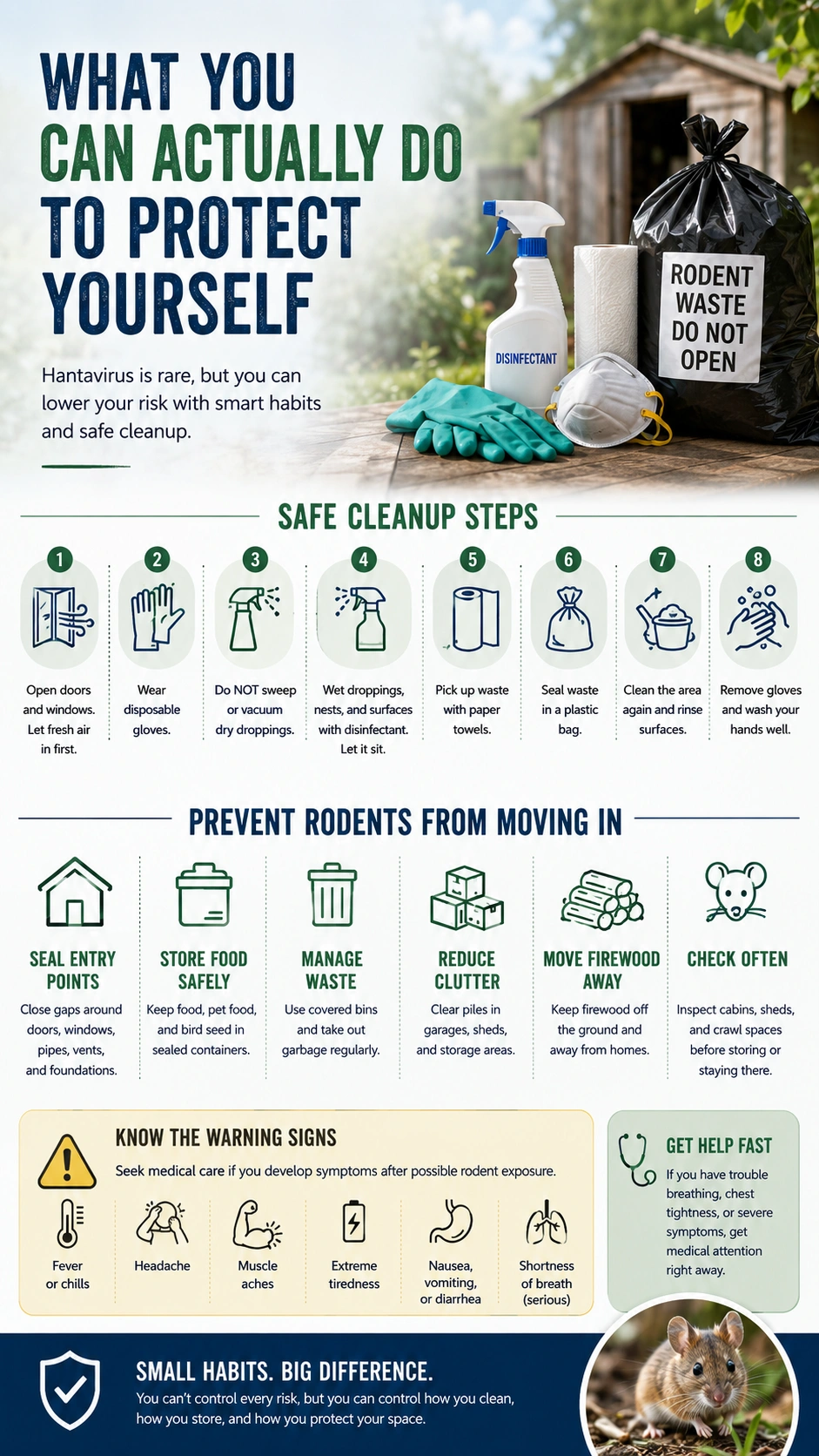
What You Can Actually Do to Protect Yourself
Prevention, in the absence of a vaccine, is the only real tool available. The good news is that the main transmission route — inhaling aerosolized rodent waste — is something that can be meaningfully disrupted with straightforward precautions:
Around the home and property:
- Seal gaps, cracks, and entry points to prevent rodents from getting inside in the first place
- Store food — including pet food and birdseed — in sealed, rodent-proof containers
- When reopening a cabin or rural property after months of closure, ventilate it thoroughly for at least 30 minutes before starting to clean
- Always wear an FFP2 or FFP3 respirator when cleaning areas where rodents may have been active — not a surgical mask, a proper filtering respirator
- Never sweep or vacuum dry droppings — wet the area first with a diluted bleach solution, then wipe up using gloves and dispose of materials in sealed bags
During outdoor and recreational activities:
- Be aware of peak vole years in your region and adjust caution accordingly
- Don’t sleep directly on the ground in forested areas during high-risk seasons
- Keep food sealed and elevated when camping
- Don’t handle dead rodents or disturb burrow sites without protection
For people in high-risk occupations:
- Follow employer protocols for rodent exposure scenarios
- Use FFP3 respirators when working in spaces with known rodent activity
- If you develop a sudden fever, severe headache, and back pain in the weeks following potential rodent exposure, tell your doctor explicitly — don’t just describe the symptoms and hope the connection gets made
Final Thoughts
Hantavirus in Europe is one of those public health stories that sits in an uncomfortable middle ground — serious enough to matter, but not dramatic enough to stay in the news. The outbreaks don’t have the visual impact of flood disasters or the person-to-person spread of respiratory viruses. They happen quietly, one person at a time, mostly in rural areas, mostly among people doing ordinary outdoor activities.
That quietness doesn’t make the disease less real. Thousands of Europeans are hospitalized with HFRS every year. The bank voles in Finnish forests, the yellow-necked mice in Balkan woodland, the brown rats in urban sewers — they’re all doing what they’ve always done, carrying viruses they evolved with over thousands of years and occasionally passing them on to a human who happened to be in the wrong place.
Understanding the risk, knowing the early signs, and taking a few straightforward precautions changes the equation considerably. That’s not an overwhelming ask — it’s just the kind of practical awareness that makes a genuine difference.